Posted by Paul on Jul 6, 2026, 1:20 PM


Gannet Colony - Cape Kidnappers
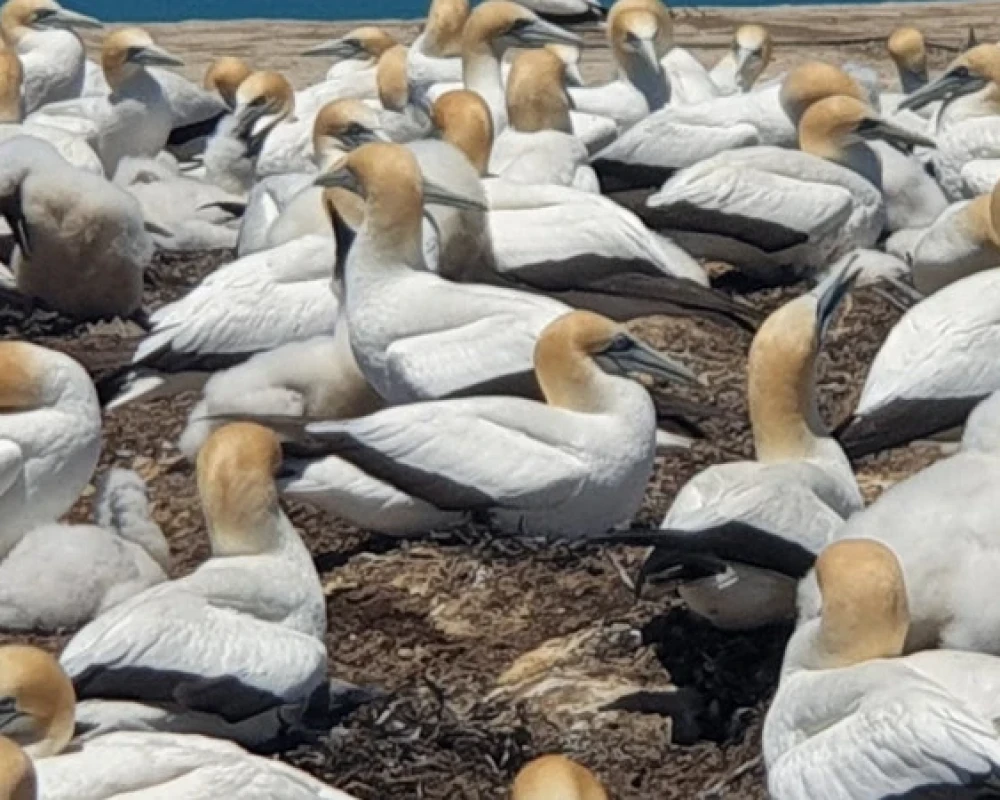
Jutting out into the southern end of Hawke Bay, Cape Kidnappers—known in Māori as Te Kauwae-a-Māui, the fishhook of Māui—is one of the most dramatic stretches of coastline in the North Island. Captain James Cook named the headland in October 1769 after local Māori tried to take a Tahitian boy from the Endeavour, believing he was being held against his will. Today, the towering sandstone cliffs are best known as home to the world’s largest accessible mainland colony of Australasian gannets.
What Makes It Worth the Trip
Between September and April, more than 20,000 gannets return to the cliff tops across four distinct nesting colonies—Saddle Colony, Black Reef, Plateau Colony, and Cape Kidnappers itself—to pair off and raise their chicks:
- Close-Up Wildlife Views: Seeing thousands of gannets packed onto the flat plateau with bright yellow heads, black wingtips, and striking sky-blue eyes—all wheeling in on the sea breeze just metres from the low rope barriers—is a bucket-list sight.
- Best Months to Visit: November through February is peak season when fluffy white chicks are hatching and growing, while birds begin heading back out to sea by late April.
- Fossils & Petrified Wood on the Shore: If you’re walking along the coastline below the cliffs, keep an eye out at your feet—the shifting shingle and eroded cliff rock regularly turn up petrified wood and fossilized shells alongside the sweeping ocean views.
Good to Know Before You Go
- Choose Your Route & Check Conditions: You can reach the colonies either on a guided overland tractor or 4WD tour from Te Awanga/Clifton across private farm land, or by walking the beach route from Clifton at low tide. Because the beach walk runs directly beneath unstable cliffs and gets cut off by incoming tides, always check current cliff-fall advisories and strict tide windows before setting off on foot.
- Allow Half a Day: Guided tours generally take around 3.5 to 4 hours return, while the beach walk takes roughly 4 to 5 hours depending on tide timing and pace.Pack for Exposed Coastal Weather: Even on a calm morning in Napier, it can get brisk and windy out on the headland—bring a windproof jacket, sunblock, and plenty of water.
Where to Stay Nearby
Napier and Hawke’s Bay make an easy weekend getaway whether you’re here for the coastal wildlife, wineries, or Art Deco streets. Have a look at our local motels, lodges, and holiday parks nearby to find a convenient base in the region.



© 2026 Paul's Travel. All rights reserved | Privacy Policy | Terms of Trade