Posted by Paul on Jul 29, 2026, 11:37 AM


Mitchells Cottage - Alexandra
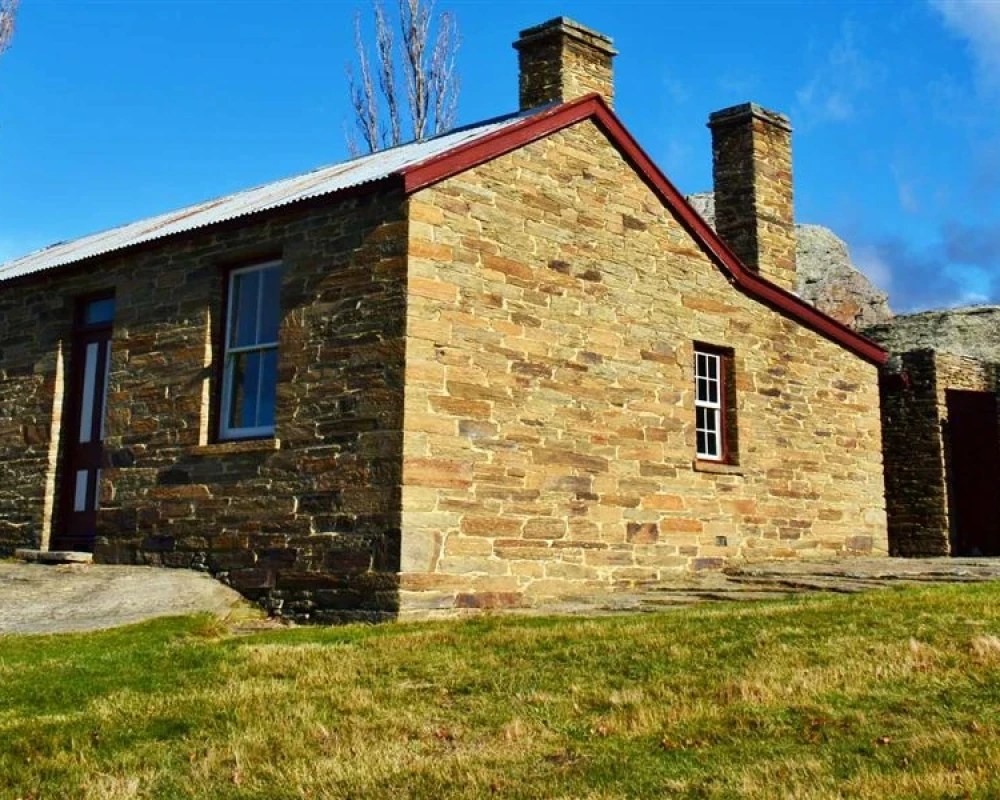
Tucked among giant schist tors in Central Otago’s Fruitlands district about 13 km south of Alexandra, Mitchells Cottage is one of the region’s finest surviving stone homes from the gold-mining era. Surrounded by rugged tussock hills with sweeping views across the valley, it’s a quiet, fascinating window into how early Shetland Islands stonemasons built a lasting home out of bare Central Otago rock.
Built by Hand From Local Schist (1880–1904)
Gold miner Andrew Mitchell began building the cottage in 1880 for his brother John and sister-in-law Jessie. Drawing on dry-stone masonry techniques learned from his father back in the Shetland Islands, Andrew quarried and shaped local schist by hand to create a solid five-room home—a painstaking project that took 24 years and was finally completed in 1904:
- Raising Ten Children: John and Jessie raised their family of ten children inside the stone cottage.
- Living Trees & Hand-Carved Sundial: Around the grounds, Andrew also planted shelter trees—including holly and spruce that still grow there today—and carved an intricate sundial out of solid schist that still sits in the garden.
- Protected Historic Reserve: The cottage and surrounding grounds became a historic reserve in 1980, preserving both the stonework and its setting among the towering schist tors.
From Gabriel’s Gully to Bald Hill Flat & Fruitlands
The Mitchell brothers’ story follows the classic path of 19th-century Otago gold miners:
- Chasing the Gold: After leaving the Shetland Islands as young men, Andrew first mined in Victoria, Australia, before following relatives to Gabriel’s Gully in the 1860s. When yields there declined, he pushed north to Bald Hill Flat(now Fruitlands), discovering a quartz reef in the mid-1870s and working it with his cousin James White before selling the claim in 1884.
- Mining Obelisk Creek: John joined him in 1886, and together the brothers mined Obelisk Creek, building a water race to sluice their claim.
- How Fruitlands Got Its Name: At its peak, Bald Hill Flat supported a store and hotel before gold mining largely wound down by 1907, with many miners turning to farming or rabbiting. After World War I, the government planted thousands of fruit trees here for returned soldiers—giving the district its name “Fruitlands”—and although most of those early trees struggled in the harsh Central Otago climate, the old miners’ water races remain vital today for irrigating local orchards and farms.
Good to Know Before You Go
- Easy Detour Off State Highway 8: Turn off State Highway 8 onto Symes Road about 13 km south of Alexandra (between Alexandra and Roxburgh) and follow the short gravel road up to the reserve car park.
- Pair It With Gabriel’s Gully: If you’re following the Central Otago gold-rush trail along SH8, it pairs naturally with Gabriel’s Gully at Lawrence and Old Sod Cottage near Milton further south.
Where to Stay Nearby
Alexandra, Clyde, and the wider Central Otago region make a great base whether you’re exploring gold-rush heritage, riding the Otago Central Rail Trail, or touring local orchards and vineyards. Have a look at our local motels, lodges, and holiday parks nearby to find a convenient spot to stay in the region.



© 2026 Paul's Travel. All rights reserved | Privacy Policy | Terms of Trade